
On October 5-6, we gathered with hundreds of people working to make buildings healthier, more efficient, and more resilient. In partnership with our host sponsor, NYSERDA, GTZ Forum 2026 took place across multiple locations in New York City, including AIA New York’s Center for Architecture, Building Energy Exchange, Skidmore, Owings & Merrill (SOM), Solar One’s The Brant, and Civic Hall. Over two days, we connected with and learned from the practitioners who develop building energy code and policy, design building improvements, develop cutting-edge technologies, implement adoption strategies, and keep people and communities at the center of our work.
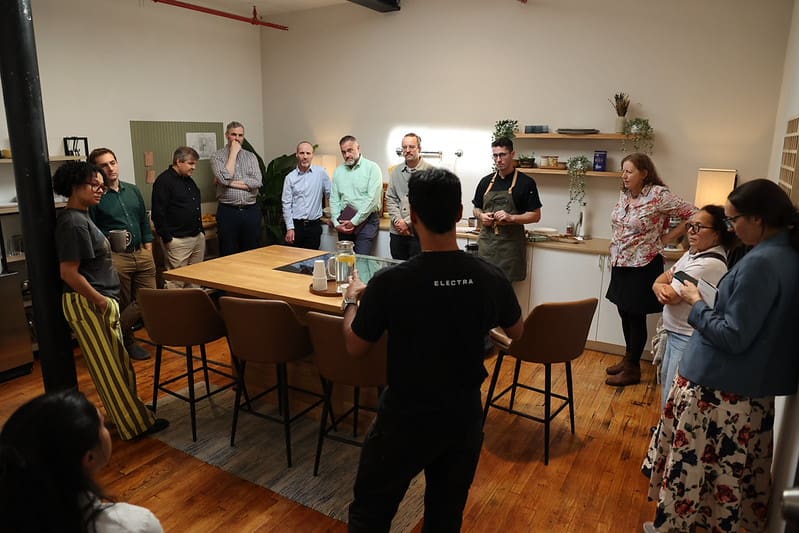
Monday started with a running tour through Lower Manhattan that asked what makes a building genuinely green. Some attendees volunteered at Stuyvesant Cove Park, while others took one of two tours at Brooklyn-based Electra Research to experience its 120-volt, battery-equipped induction stove in action. In the afternoon, we held three workshops across the city on responsible data center growth, embodied carbon, and what’s next for building energy codes. We came back together at Civic Hall for The Discovery Hour, where attendees engaged with poster presentations paired with an opening reception. We finished the evening with small-group Dine Arounds.


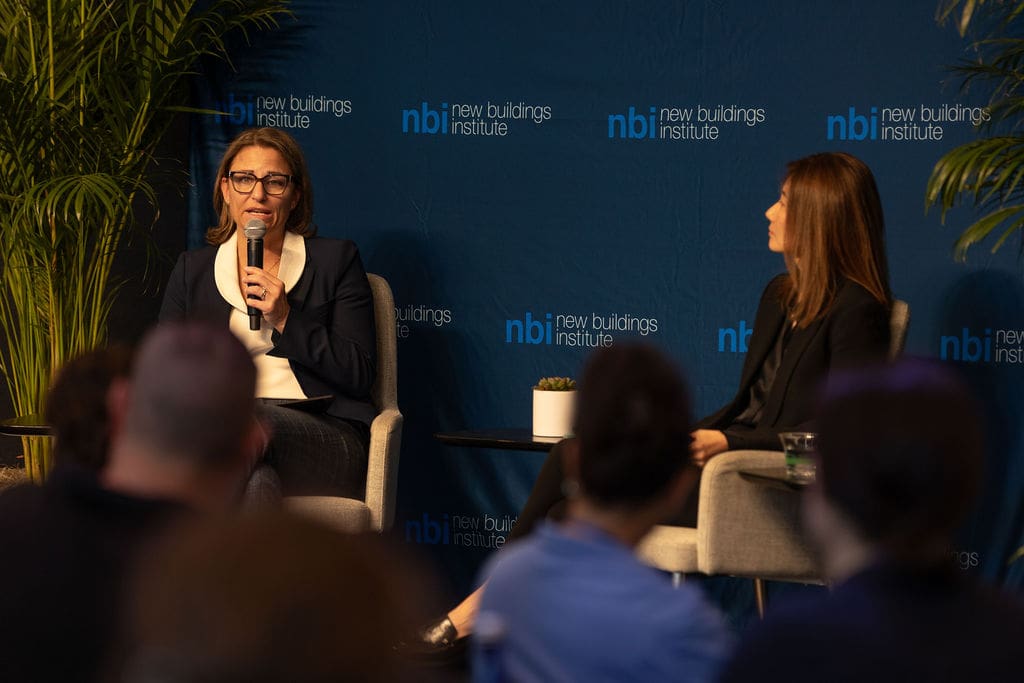
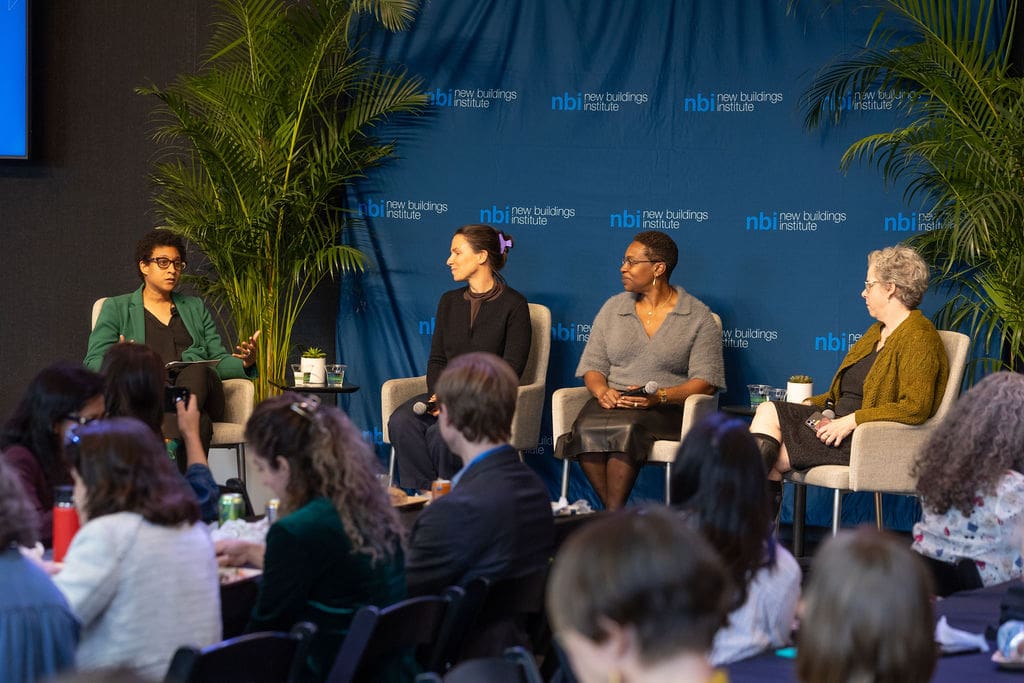
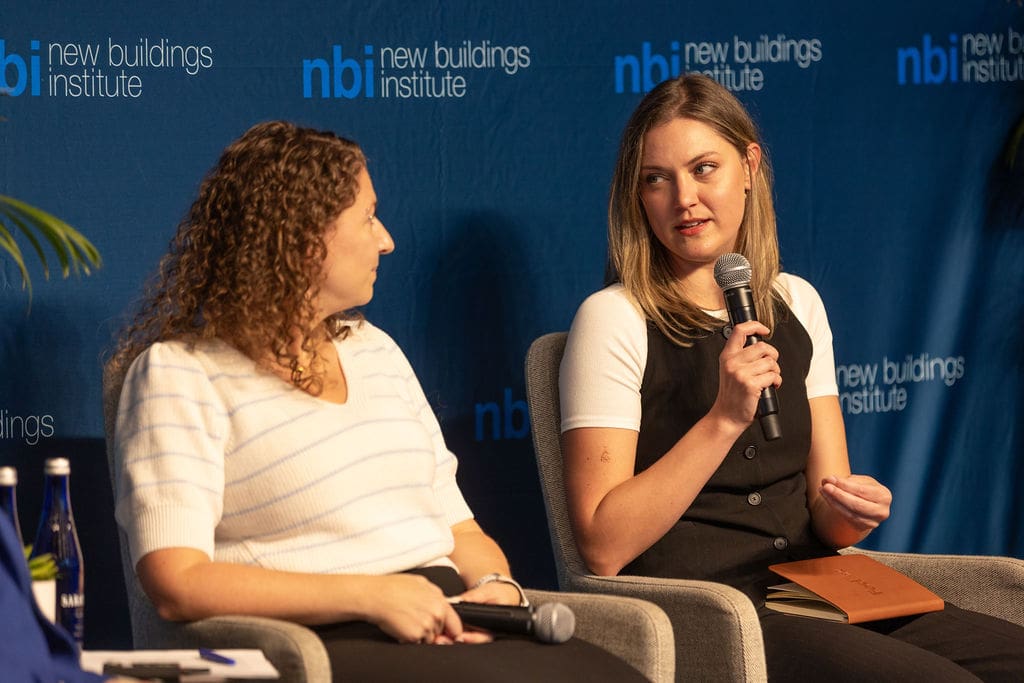
Tuesday opened at Civic Hall with a conversation between NBI CEO Nora Wang Esram and NYSERDA President and CEO Doreen M. Harris on the challenges facing the building decarbonization sector and opportunities for collaboration among businesses, advocates, and policymakers. The Tuesday breakout sessions spanned three tracks: building codes and policy, grid interactivity and energy resilience, and emerging technology and market solutions. Workforce development took the spotlight at the Next Gen Nosh lunch plenary. Joeann Walker, Con Edison community impact and engagement leader, moderated a panel of local workforce experts including Beth Golub with the NYC Department of Buildings, Shakira Hart with Solar One, and Ellen Honigstock with Urban Green Council. They discussed current clean energy workforce development efforts in New York City, the gaps that remain, and how the industry can prepare the next generation of leaders. We wrapped up with The Path Ahead: Delivering High-Performance, Affordable Homes That Are Built to Last plenary and reception. Lotte Schlegel, founder and senior advisor to the Housing Multiplier Project, led a conversation with Anne Law with the National Institute of Building Sciences, Natasha Main with the City of Rochester, and Samantha Pearce with New York State Homes and Community Renewal on one of the biggest questions we’re facing: how to increase affordable housing stock that is also efficient, resilient, healthy, and low-carbon.
Here are a few of our team’s takeaways:

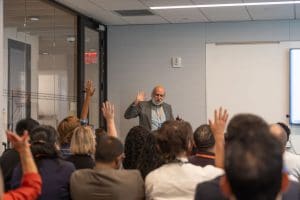
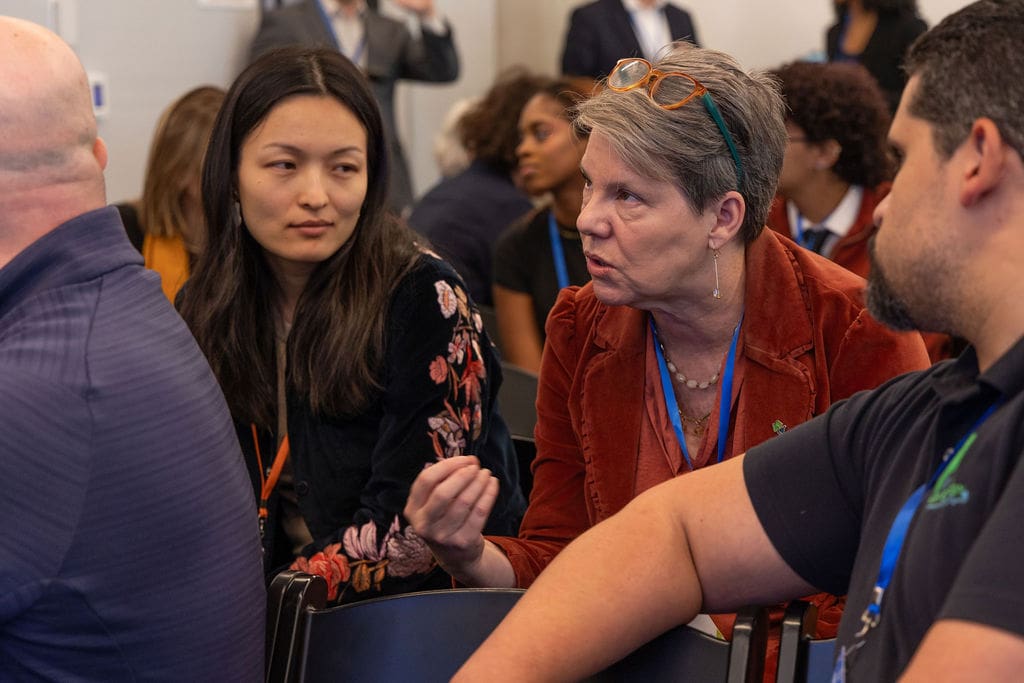
- What makes a data center a good neighbor? We asked and answered this question at the NEMA-sponsored workshop Building Trust in Data Center Growth: Energy Standards for Grid, Climate, and Community Outcomes. A facility can use electricity efficiently and still strain the grid on the hottest days, draw heavily on local water supplies, or rely on backup generators that add to air pollution. The workshop takeaway was to judge data center performance by what happens inside the facility, what it asks of the grid, and the impact on nearby residents. States and communities are asking developers for more information about those impacts. They need verifiable benchmarks to compare projects and confirm promised benefits. Technologies that use less water for cooling, reuse waste heat, or shift electricity use away from peak hours are already available. Codes, standards, and voluntary certifications can each cover different parts of the picture. Together, they can give developers clearer expectations.
- Retrofitting today’s building stock to reduce emissions and improve energy affordability requires a range of creative solutions. Promising new technologies are giving property managers and building owners more flexibility. The breakout session, Decentralized Solutions for Multifamily Electrification: A Practical Decision Lab for Property Owners and Managers, gave attendees insights on in-room heat pumps and integrated heat pump water heaters. Attendees in Debunking Decarbonization Myths with the Empire Building Challenge learned how to phase decarbonization around heat recovery to reduce risk and unlock long-term value.
- State and local jurisdictions came up throughout the Forum. At Monday’s workshop, What’s Next for Buildings: The Decarbonization Toolkit, at SOM, members of NBI’s codes and policy team joined panelists from state and local agencies and industry leaders for an interactive session with facilitated discussions and hands-on exercises. The workshop examined how building energy regulation can support broader emissions goals, a question that matters to both the agencies that set policy and the local teams that put it into practice. On Tuesday, the breakout session, The Model Net Zero Residential Code: Impacts and Strategies for Implementation, looked at how six states and four nonprofits are working together on amendments to the residential International Energy Conservation Code. They’re developing changes that jurisdictions could adopt over several code cycles, giving builders and code officials time to prepare for the next set of requirements and learn from what happened during the previous rollout.
- Overcoming the value gap between who invests in buildings and who benefits from those upgraded buildings remains a challenge. In the breakout session, Making Projects Pencil: Financing Community Resilience, a panel composed of financiers, developers, and city officials asked how we can make energy-efficient retrofits financially possible. Efficiency, electrification, and energy resilience measures deliver benefits beyond lower energy bills: they cut peak demand, improve air quality, and reduce carbon emissions and public health costs. Recognizing and reflecting those benefits in the overall value of multifamily and commercial real estate retrofits will support deeper investment and wider implementation.
- At AIA New York’s Center for Architecture, the workshop, Embodied Carbon at a Crossroads: Aligning Policy, Market Demand, and Supply Chains for the Next Phase of Decarbonization, explored where embodied carbon policy is heading and what it will take to make it effective. States and cities are already testing ways to cut embodied carbon through purchasing rules, codes, and incentives. The next step is to learn from those early efforts and align requirements where possible, so a supplier or design team working in several markets can use the same data and report it in a familiar format. The embodied carbon community can look to leading private-sector firms that are adopting emissions targets, developing open tools, and embedding embodied carbon into design workflows and portfolio-wide procurement standards. The biggest gains will come from thinking critically and creatively: pairing aligned requirements with what leading firms are already doing.
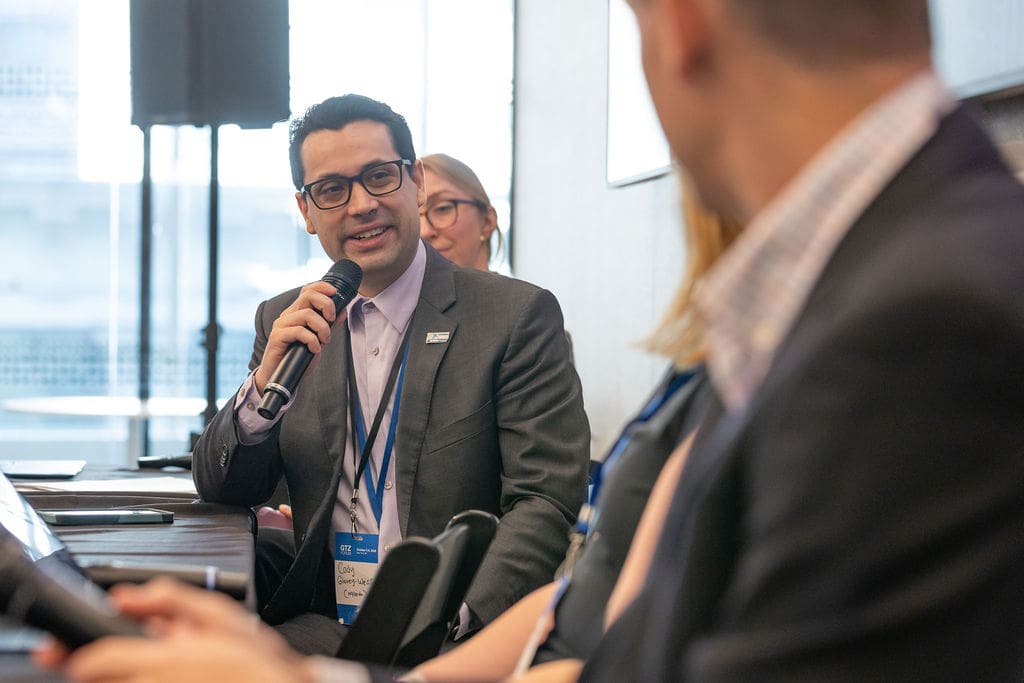
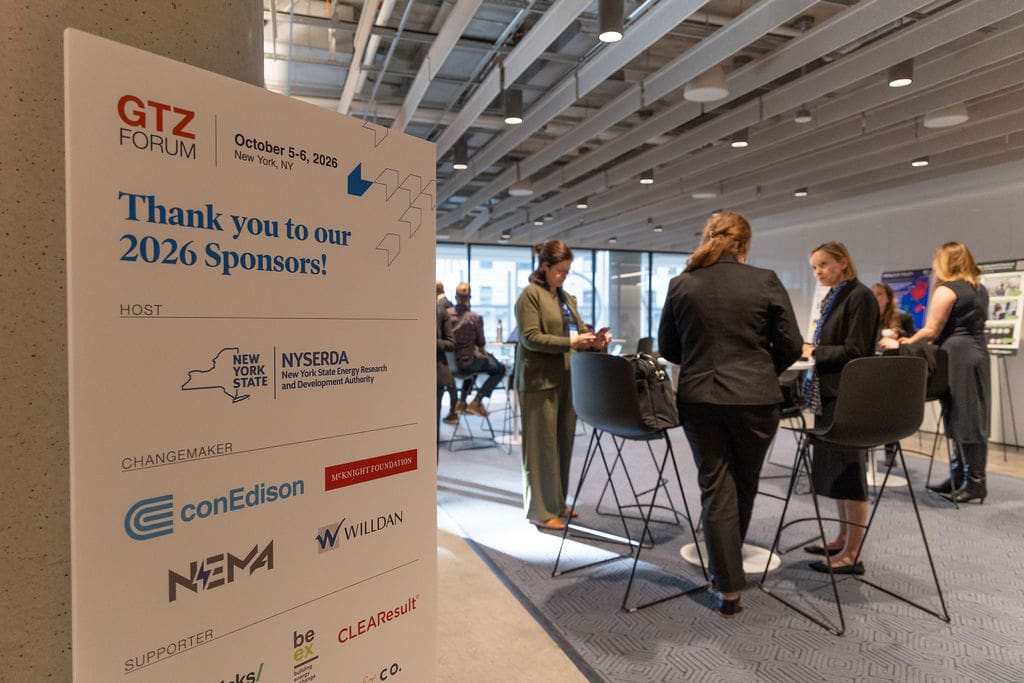
Thank you to all the sponsors who supported GTZ Forum 2026, especially our host, NYSERDA. In all, dozens of local and national partners helped make GTZ Forum 2026 a success. We’re grateful to the workshop and tour hosts who graciously shared their buildings with us, the speakers and students who shared their work, and everyone who joined us in New York. We look forward to keeping the conversation going at future NBI events.
Sign up for our newsletter to stay informed.