
What You Need to Know About the 2030 Cycle
On May 1, the ICC Board published its Public Comments Responses, confirming that the Scope and Intent remain unchanged from the initial draft. That means the IECC will include two sets of code books for residential and commercial buildings: the [A] IECC and the [B] IECC, for a total of four code books.
[A] IECC is significantly narrower in scope than the 2024 and 2027 IECC, prohibiting electric energy storage, on- and off-site renewable energy, EV charging, operational and embodied carbon performance, and readiness measures, while also limiting demand response and load management requirements to appendices or optional credits. [B] IECC largely retains the scope of the 2024 and 2027 IECC, allowing the above list of measures to be considered in optional credit pathways and appendices. For both code books, the Board’s Scope and Intent introduce overly restrictive cost-effectiveness criteria, including simple payback analyses with prescribed payback periods that align with first-time home buyer and commercial lease tenancy periods, rather than building-system or component estimated useful lives.
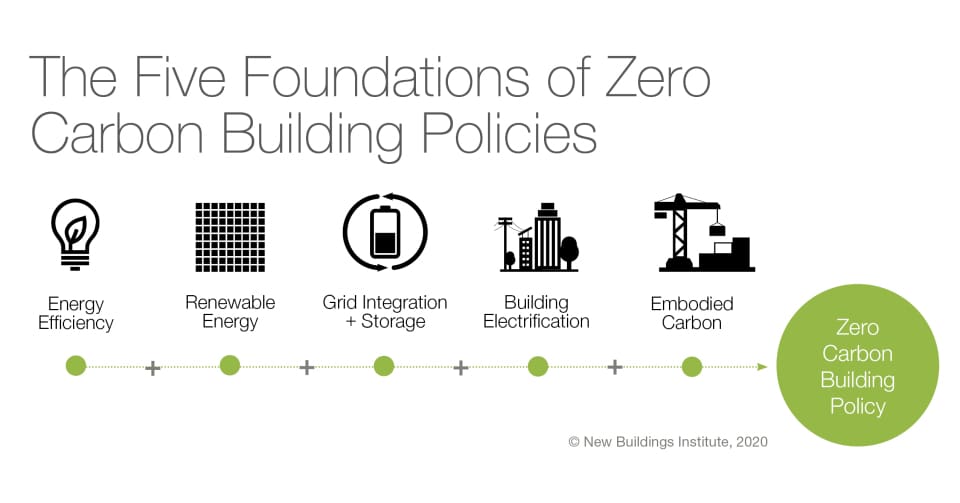
NBI has applied to join both the residential and commercial [A] IECC committees as we did for the 2024 and 2027 cycles. However, we still anticipate engaging substantially with both code development processes and submitting proposals to [B] IECC. As outlined in NBI’s 5 Pillars of Decarbonization, energy efficiency is just one (albeit very important) component of comprehensive building decarbonization. States and jurisdictions with ambitious energy and climate commitments look to model energy codes to advance building performance across all five pillars. It’s unclear whether the outcomes of [B] IECC will support those policy goals.
NBI’s director of codes and policy, Tristan Grant, outlined our concerns in a blog post on January 20. We also led a series of virtual roundtable meetings that convened jurisdictions, energy advocates, and high-performance builders to discuss these changes and their implications in greater detail. These roundtable discussions informed the recommendations in NBI’s public comment response. The ICC did not incorporate any changes received from NBI or the broader industry.
Where We Are Now
The Public Comment Responses document notes a growing polarization within the code development community, without noting the ICC Board’s role in overriding consensus processes and committee decisions over the past three cycles. The move to split the energy code is the latest in a series of steps by ICC as it retreats from its climate commitments outlined in Leading the Way to Energy Efficiency: A Path Forward on Energy and Sustainability to Confront a Changing Climate, published in 2021. In that document, ICC pledges that each edition of the code will increase efficiency over the prior edition and that the IECC will include pathways to achieve zero-energy buildings by 2030. Since then, the ICC Board has yielded to appeals from organizations including the National Multifamily Housing Council, the Building Owners and Managers Association, the American Gas Association, and the American Public Gas Association. The action to remove nearly all mandatory building decarbonization measures from the 2024 IECC and to exclude any potential new measures from the 2027 cycle contradicted previous guidance at the onset of the 2024 cycle and ICC staff recommendations to deny the appeals. The drastic steps taken for the 2030 code cycle cement ICC’s retreat from energy and climate commitments.
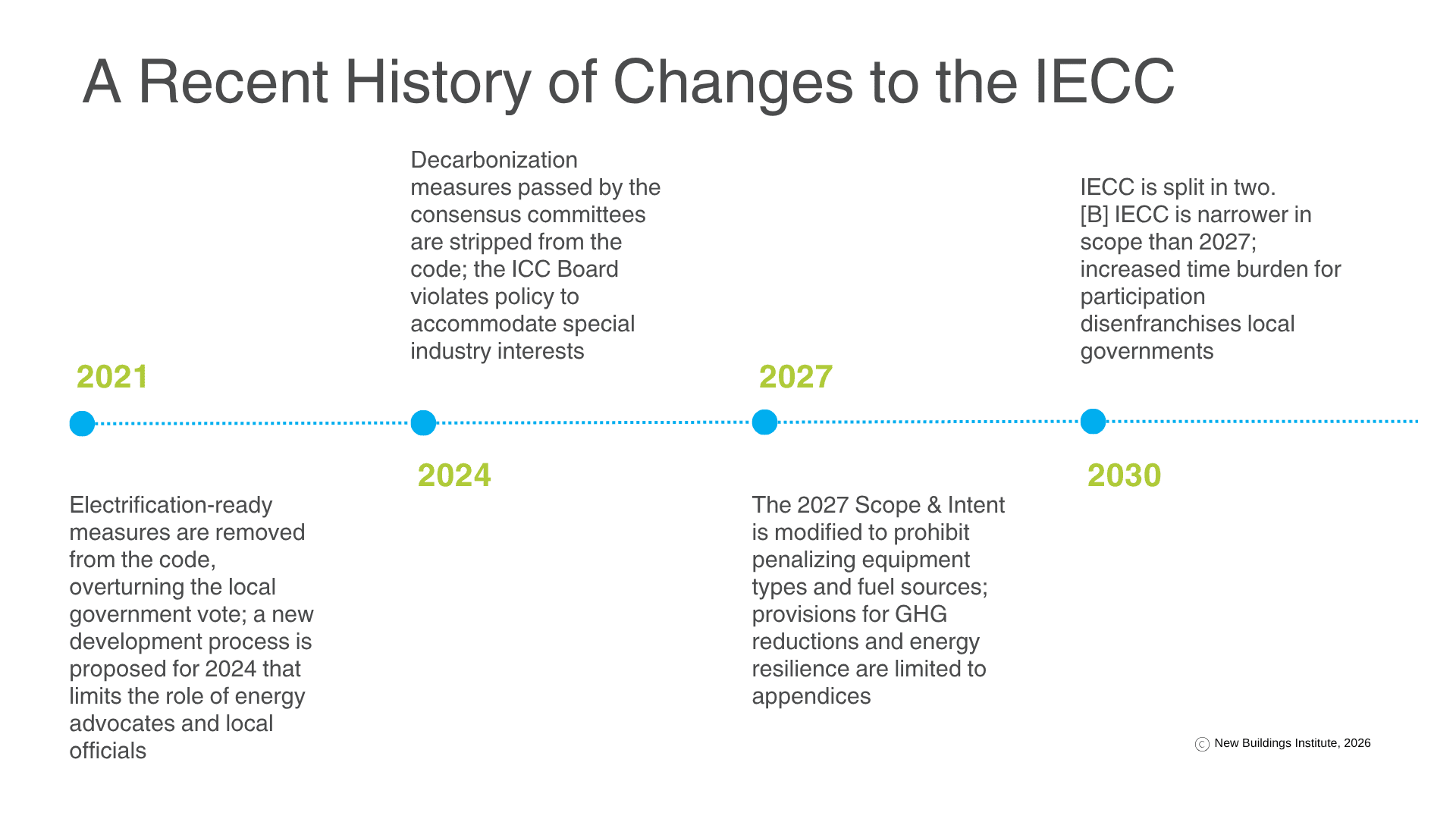
Our reiterated concerns with the ICC Board’s final decisions are as follows:
- ICC has abandoned its commitment to the IECC to make continuous progress toward efficiency. The ICC Board does not commit to reaching positive energy savings beyond the 2027 version. The 2030 IECC is already less efficient than the 2027 IECC due to the removal of renewable energy requirements. These actions will have direct impacts on energy affordability, grid reliability, and building occupant health, comfort, and safety.
- The ICC has backed away from the energy and climate commitments it made in 2021. The [B] IECC, while broader in scope, does not include any statement of purpose or intent to be higher-efficiency, lower-carbon, or otherwise to meet advanced energy performance.
- The [A] IECC codes cost framework and simple payback will be barriers to many energy efficiency measures, even those that are lifecycle cost-effective.
- The ICC Board has indicated that proposals that do not meet the simple payback periods will not be considered at all, severely limiting committees’ ability to consider energy measures outside the prescribed cost framework.
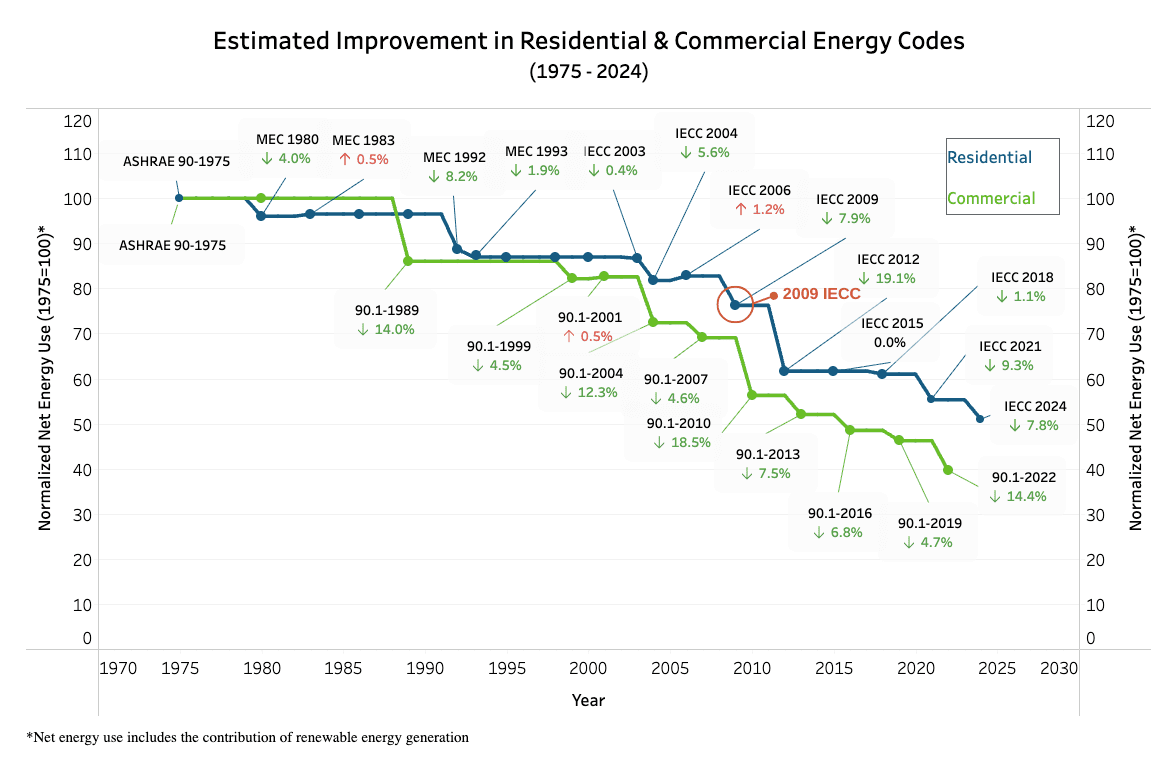
- The new cost framework could be used to roll back measures that increased efficiency in past cycles by evaluating efficiency improvements made under the 2012 and 2021 cycles under the new, regressive cost framework. If this were to occur, the 2030 IECC could look more like a modernized version of the 2009 IECC than an improvement over the 2027 code. Such a move would raise questions about the U.S. Department of Energy energy code determinations and potential impacts on future state funding contingent on code adoption.
- The [B] IECC cost framework does not consider public health costs or the social cost of greenhouse gas emissions associated with building energy use. As such, it is unclear how carbon-only measures—which are definitively in scope of the [B] IECC code—could be cost-justified and considered under the ICC Board’s guidance.
- The Public Comment Response document also reduces government member representation from one-third in the current consensus committees to 25 percent in the [A] IECC and 20 percent in the [B] IECC. This move disenfranchises the most important stakeholders—the jurisdictional adopters of the IECC—from the code’s development process, and risks deprioritizing the interests represented by government officials.
In the Public Comments Response document, the ICC Board welcomed recommendations for alternative payback periods, implying flexibility. However, it’s unclear whether the Board would consider the committee’s recommendation to reconfigure the cost framework entirely or only modify the payback periods.
What This Means and Where We’re Going
Better energy codes support the design, construction, and operation of better buildings that are more efficient, have lower utility bills, are healthier and more comfortable, are safer during extreme weather and grid disruptions, contribute to grid resilience and reliability, and are future-ready.
NBI will continue to engage in good faith in the development process to make meaningful progress, resist rollbacks, and support the IECC 2030 in meeting the needs of adopting states and jurisdictions. To prepare for the upcoming code cycle, NBI plans to explore and pursue the following near-term actions:
- Host additional roundtables with state, jurisdictional, and industry stakeholders to discuss ideal outcomes of the 2030 cycle. Through this, NBI hopes to identify a list of priority code proposal topics for development for both [A] IECC and [B] IECC.
- Engage interested parties and industry experts knowledgeable on cost-effectiveness methodologies to develop a revised cost-effectiveness framework that can be considered and voted on by the [A] IECC and [B] IECC consensus committees and recommended to the ICC board.
- Continue working directly with jurisdictions to account for and plan to minimize the detrimental effect that the IECC’s lack of progress may otherwise have on state and local progress towards energy and climate targets.
Our Advice to States and Local Jurisdictions
Among NBI’s concerns are that the 2030 code cycle will produce two code books that are ill-equipped to meet the needs of adopting jurisdictions. [A] IECC lacks a cost framework that would yield significant efficiency improvements and cost reductions, and [B] IECC is broader in scope but directionless, lacking a statement of intent to achieve improved energy efficiency or operational and embodied carbon reductions. States and local jurisdictions looking to the 2030 code should be aware of the limitations of [A] IECC and [B] IECC in advancing towards their energy and climate targets. We anticipate that adopting jurisdictions should begin to look beyond the IECC as a turnkey resource, and plan to adopt with significant amendments to meet their needs.
We’ll continue to explore these topics at upcoming NBI roundtables and at the 2026 GTZ Forum, October 5-6, 2026, in New York City. Sign up to receive news from NBI’s Codes & Policy team to stay informed.
Author
 by Ben Rabe, associate director, codes & policy
With thanks to Amie Lewis for her contributions to this post.