
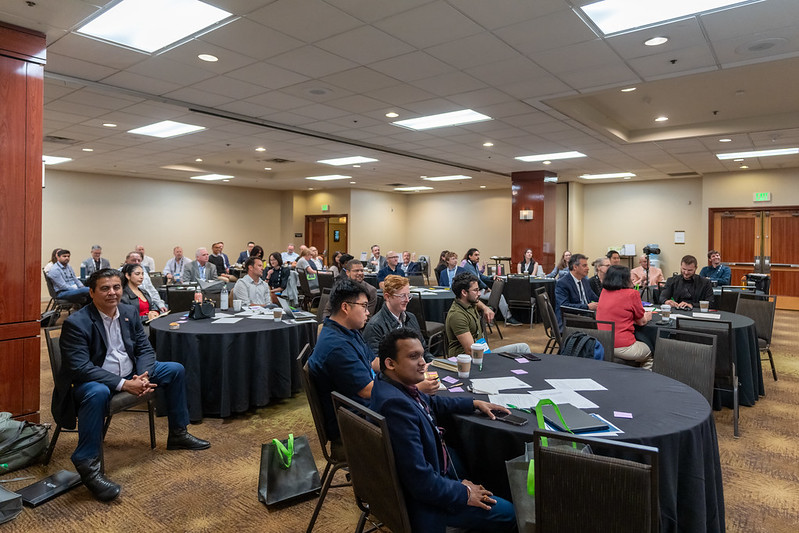
On April 22, New Buildings Institute (NBI) kicked off Earth Week at our 9th Getting to Zero Forum in Los Angeles, California, convening a diverse cross-section of over 300 built environment leaders, practitioners, and scholars committed to advancing high-performance buildings to create sustainable, thriving communities.

The multifaceted event included a behind-the-scenes tour of The Getty, volunteering at the L.A. Regional Food Bank, our second Embodied Carbon Summit, two half-day workshops on workforce development and decarbonizing schools, three inspiring plenaries, and 25 breakout sessions covering embodied carbon, energy efficiency, electrification, demand flexibility, equity, resilience, finance, workforce development, and yes—even AI. We also made time to connect with long-time colleagues and spark new relationships.
We chose Los Angeles for the 2025 Getting to Zero Forum because of California’s historical leadership on building energy codes through Title 24 and the newly updated 2025 Building Energy Code Standards.
In early 2025, the devastating impact of the wildfires in L.A., coupled with the funding and staff cuts coming out of D.C., prompted us to reconsider our focus. We pivoted to support recovery efforts in L.A. and emphasize the importance of climate mitigation and resilience planning for state and local governments. From keynotes to breakout sessions, we invited local leaders to share insights on how to rebuild so that our buildings and our communities emerge stronger, safer, and more resilient.
The 2025 GTZ Forum was made possible by our generous sponsors, partners, and speakers. Thank you for your support!
Making a Difference with Collective Action at the Local Level
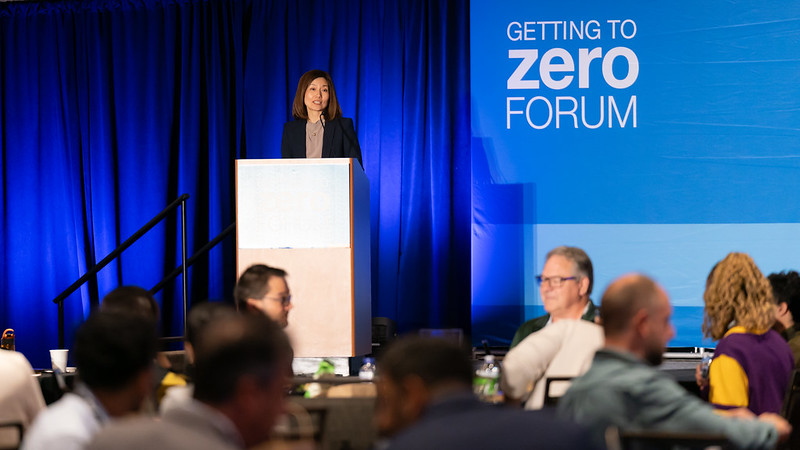
NBI’s CEO, Nora Wang Esram, opened the GTZ Forum by saying, “Showing up in this room, at this moment, says something powerful about you: you are committed, you are driven, and you are brave. Through the unprecedented hurdles and headwinds, we’ve faced so far this year, NBI did not walk away from our commitment to advancing net zero buildings,” and neither did the building industry leaders who gathered at the GTZ Forum to connect with their peers, share real-life solutions, and drive meaningful impact. As Nora put it, in the face of challenges, “this moment matters.”
The building industry is at a critical crossroads. Extreme weather events, reduced federal funding, and economic uncertainty present consequential obstacles to realizing a sustainable built environment.
In his opening keynote, Gene Rodrigues’s joyful energy lit up the room as he asked attendees to rise to the challenges we face, highlighting that leadership at the local level can make a real difference for the communities we serve. Gene appealed to the audience to be part of the solution with a clear call to action, “The only way change is possible is if we make it happen, individually and collectively.”
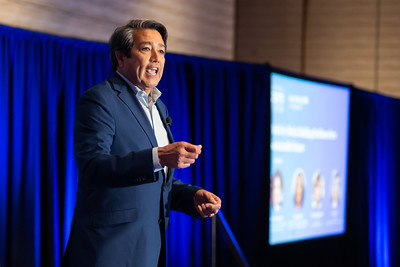
GTZ Forum speakers and panelists explored important topics such as boosting local economies and preparing for extreme weather through building investments, strengthening the green workforce and clean energy economy through regional collaboration, reusing waste heat from data centers, repurposing commercial spaces into transitional housing for vulnerable populations, and strategically engaging communities for maximum impact.
At the closing plenary, ‘Local Action, Global Impact: Advancing Zero Emissions Buildings in Your Community,’ keynote speaker Nurit Katz, underlined the importance of local initiatives for zero emission buildings, shared insights from state and local leaders, and highlighted successful strategies for reducing emissions and increasing biodiversity. Nurit emphasized that, “small actions can have far-reaching impacts.” The session provided actionable takeaways and real-world examples, empowering attendees with the knowledge to make a meaningful impact by implementing sustainable building practices in their communities.
Designing Resilient Buildings and Communities
Resilience emerged as a guiding theme at the GTZ Forum. During the opening plenary panel discussion, Ana Lasso (Director of the California Department of General Services), Nancy Sutley (Deputy Mayor for Energy and Sustainability, City of L.A.), and Nora Wang Esram emphasized the need to harness our collective innovation to create long-lasting resiliency solutions for rebuilding from the L.A. wildfires. Their dynamic discussion covered how policy, design, construction, technology, market development, and personal resilience intersect to enhance buildings for people, communities, and the planet.
The conversation continued in sessions on the resiliency benefits of real-world microgrid installations, how the City of L.A. is decarbonizing its commercial buildings, the state’s approach to reducing residential emissions, and a comprehensive workshop led by New Buildings Institute (NBI), where participants discussed resilience and adaptation planning in their communities. We are developing a short white paper on this workshop, which we’ll share later this summer, highlighting how design professions and key stakeholders can foster increased collaboration on multidisciplinary resilience approaches and solutions.
Cultivating an Innovative and Diverse Future
Throughout the Forum, many presentations highlighted the rapid evolution of our industry. From emerging AI technologies to essential shifts within the workforce, we are all exploring ways to innovate, adapt, and build momentum today and for future generations.
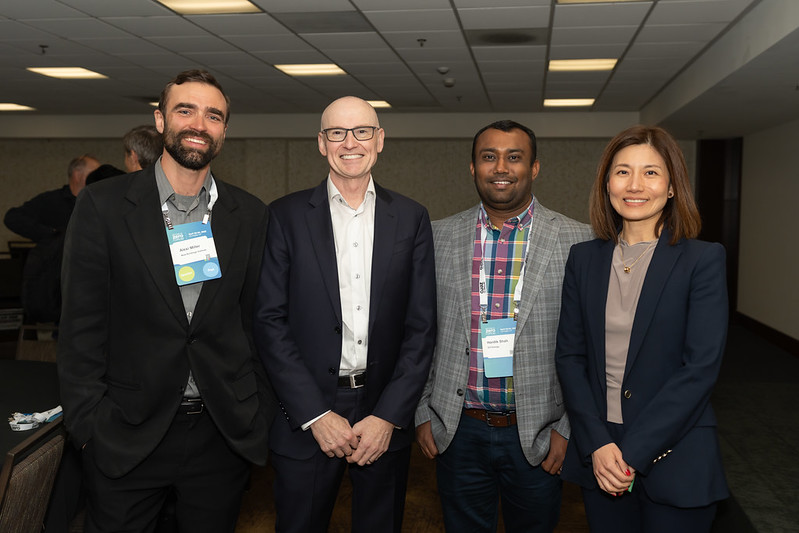
With the recent acceleration of AI, grasping its capabilities and potential impact on buildings and energy use is essential. Nora Wang Esram led a roundtable with leading voices in building technology to explore how AI can promote a more efficient, resilient, and healthy built environment. Insights from the roundtable inspired Nora’s recent blog post, AI for Buildings: Hype, Dream, or Reality?
Innovation doesn’t only happen through adopting new technologies, it also comes from sharing perspectives and collaborative problem-solving, which means that expanding and supporting the next generation of leaders is critical. With that in mind, we invited Angela Son, founder of The Green Launchpad, to be our keynote for the Next Gen Nosh: A Networking Lunch. Angela discussed her career journey and how essential it is to connect the incoming workforce with clean energy employers. She encouraged the audience to “Champion the next generation and build momentum. Put our hope into action.” Lunch attendees then participated in a dynamic networking activity with students from NBI’s Next Gen program, where seasoned experts shared their expertise while students and early career professionals built their industry networks. The lunch forged new connections among a community of dedicated professionals and helped shape the leaders of tomorrow.
Rising to the Challenge and Next Steps

Motivated by the courage of our peers, the inspiring words of our keynotes, and the leading-edge solutions presented by our speakers, we launched the Getting to Zero Challenge to cap the event.
We invited GTZ Forum attendees to commit to one sustainable action within a year. Whether it’s installing a heat pump, adding net zero requirements to an RFP, or adopting a holistic decarbonization policy, every step matters. We must explore innovative solutions to meet the surging electricity demand, mitigate the impacts of extreme weather events, and ensure that buildings prioritize people’s well-being for communities to thrive. By committing to just one change this year, you can support healthier, more resilient, and affordable buildings for everyone.
You can still join the Getting to Zero Challenge! Add your commitment today! We’re planning check-ins this fall and at the 2026 GTZ Forum to measure our progress.
Join us again at the 2026 GTZ Forum. Sign up for GTZ updates to stay informed as we release dates and details about the next Forum.
Interested in becoming a sponsor for the 2026 GTZ Forum or the Next Gen student program? Please reach out to Meghan Humphreys to learn more.
Authors

Co-authored by Sarah Cadmus Burgher, Senior Event Manager
Bio

Co-authored by Anna Zamir, Associate Director of Internal Marketing and Communications
Bio