
Zero Energy Commercial Building Targets
Paper / September 9, 2019 / Codes And Policy, Getting to Zero

The critical first step in achieving a zero energy building is to set an energy use target. This Zero Energy Commercial Building Targets white paper helps define appropriate goals for these ultra-low energy buildings, which often surpass even the most stringent energy codes in place today. Designers, policymakers, and owners who are targeting zero energy buildings, whether for energy cost savings, carbon savings, occupant wellness, overall sustainability, or even status can look to this guidance to answer the crucial first question: “Where do I start?” Where that target lands, particularly for building types outside of offices, has largely remained open-ended until now. Policymakers with climate action plans, emission reduction targets, energy reduction goals, or other sustainability commitments are also looking to leverage energy targets to drive down energy use and emissions in buildings at scale through building policies. Targets that address whole-building energy use are also effective tools to overcome barriers in the existing energy code framework to move the market toward zero.
Code Updates
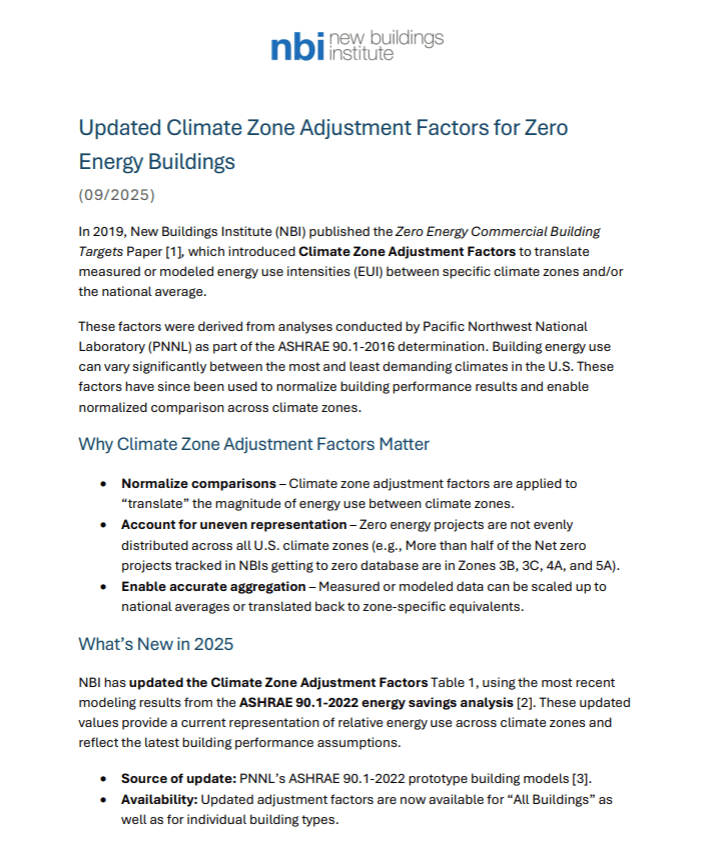
Updated Climate Zone Adjustment Factors (September 2025)
This memo follows up on a white paper published in 2019, Zero Energy Commerical Buildings Targets (ZECBT). ZECBT introduced Climate Zone Adjustment Factors, which are used to translate measured or modeled energy use intensities (EUI) between specific climate zones and/or the national average. NBI has updated the Climate Zone Adjustment Factors using the most recent ASHRAE 90.1-2022 energy savings analysis.
Download