
2026 ASHRAE Research Presentations
Paper / April 17, 2026 / Codes And Policy
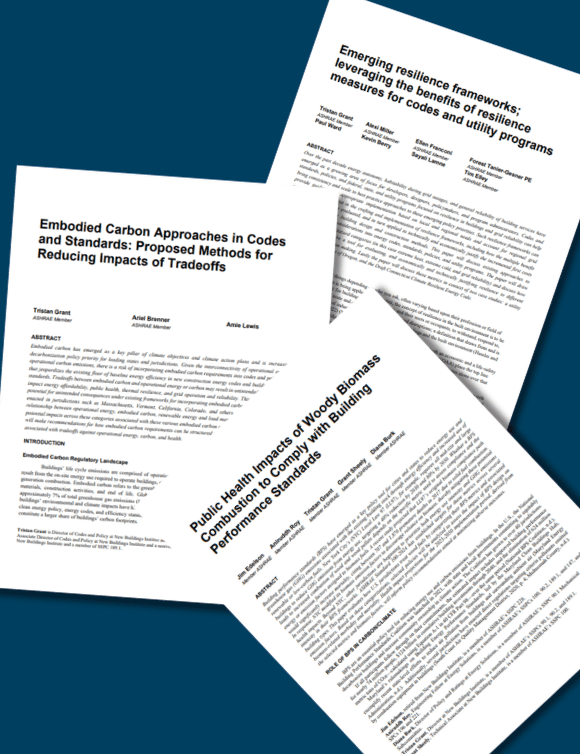
NBI attended ASHRAE Winter ‘26 to present research in core areas of embodied carbon, energy resilience, and building energy use and public health. This research is the product of partnerships between NBI’s Codes & Policy team and other experts across the industry. Across the papers, our work highlights the connections between building performance, energy codes, and human wellbeing.
Read the three papers below:
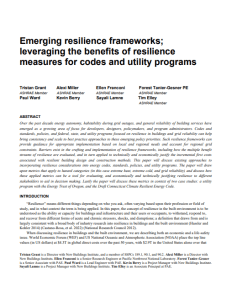 Emerging resilience frameworks; leveraging the benefits of resilience measures for codes and utility programs:

Authors: Tristan Grant, Alexi Miller, Ellen Franconi, Forest Tanier-Gesner PE, Paul Ward, Kevin Berry, Sayali Lamne, Tim Elley
NBI partnered with PAE Engineering and Pacific Northwest National Laboratory to conduct this research study on the building and grid level energy resilience impacts of the Draft Connecticut Climate Resilient Energy Code. The research demonstrated how benefits to building and grid level energy resilience can be achieved through building energy codes, policies, and program design and implementation. The authors also made recommendations for how to further advance energy resilience outcomes through effective building energy policy.
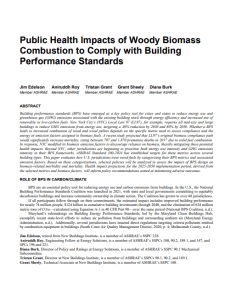 Public Health Impacts of Woody Biomass Combustion to Comply with Building Performance Standards:
Authors: Jim Edelson, Aniruddh Roy, Tristan Grant, Grant Sheely, Diana Burk
In partnership with Energy Solutions, and Codes and Policy Director Emeritus Jim Edelson, NBI conducted a policy landscape review and technical analysis of the public health impacts of woody biomass combustion if used for compliance with building performance standards. This follows previous NBI research on the intersection of new construction energy codes and public health, and illustrates the direct link between effective building energy and decarbonization policy and public health outcomes. Regardless of the accounting methods used to justify biomass combustion as a lower-emission fuel for the purposes of greenhouse gas-based compliance, associated criteria pollutant emissions have severe impacts on local and regional air quality and contribute to exacerbated health risks, and adverse health outcomes.
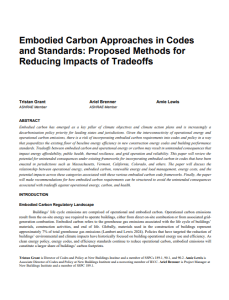 Embodied Carbon Approaches in Codes and Standards—Proposed Methods for Reducing Impacts of Tradeoffs:
Authors: Tristan Grant, Ariel Brenner, Amie Lewis
In this research, NBI staff tackle the increasingly important issue of how and where embodied carbon requirements are integrated into building codes and policies, and how to navigate and mitigate the potential for unintended consequences associated with trade-offs with other requirements. The research presents a policy landscape review of embodied carbon in codes and standards, and makes “good, better, best” recommendations for how to bring embodied carbon requirements into building codes and energy policies without compromising outcomes related to energy use, energy cost, decarbonization, air quality and public health, comfort, and grid reliability. This research is especially relevant as the IECC looks to formally permit embodied carbon in parts of the energy code through the 2030 cycle.