
The GridOptimal Buildings Initiative
Guideline / July 3, 2025 / Building Innovation
For over a century, the power grid has relied on one-way energy flows from large, centralized power plants, which are usually powered by fossil fuels. Regardless of what occurs upstream, we all expect reliable, high-quality electricity on demand to meet our needs. Across the nation and world, the roles of buildings, distributed energy resources, and electric grids are changing quickly.
New Buildings Institute is leading a collaborative initiative to transform buildings to succeed in tomorrow’s energy systems and become better grid citizens. A good grid citizen is a building that actively contributes to the grid's reliable, safe, clean, and affordable operation.

About GridOptimal
The GridOptimal® Buildings Initiative convenes and empowers utilities, building designers, owners, manufacturers, policymakers, and regulators to improve building-grid integration by conducting leading research, developing standards, and providing tools and guidance to the building sector.
GridOptimal is an international market transformation effort to advance the least-cost transformation of the electric grid through better integration of building systems, utility-scale renewable energy, and distributed energy resources (DERs: solar, storage, electric vehicles, etc.).

GridOptimal Metrics
This initiative began with foundational work to create new metrics to improve industry alignment. The GridOptimal metrics provide a standardized way to define how a building performs in terms of time-of-use energy efficiency, demand flexibility, and resiliency.
These metrics open many doors for building industry stakeholders. With these metrics:
- Utilities can better incentivize buildings to deploy design features and operational strategies that reduce peaks and deliver flexibility.
- Designers and building owners can consider building-grid optimization in their projects in sensible, straightforward, replicable ways.
- Building codes and standards can encourage and require the adoption of these solutions.
Together, these forces will encourage market actors to develop new solutions for current and emerging grid challenges, making our energy systems more affordable, more resilient, cleaner, and safer.
Learn more in our summary blog and detailed white paper.
Areas of Focus
- Advancing utility and voluntary efficiency and demand response programs
- Supporting emerging technology field validations for flexible load management
- Publishing industry-leading research, dashboards, and tools
- Providing market-oriented, actionable building design and operations guidance
- Driving code and policy alignment and advancement
- Identifying and addressing gaps and barriers in industry tools and practices
Key GridOptimal Projects
Microgrid Opportunities: Vehicles Enhancing Resiliency (MOVER)
This bleeding-edge field validation project is developing a new, scalable model for vehicle-to-building electricity optimization, coupled with resilience and grid services. Hood River’s Wy’East Middle School will have a new community resilience microgrid that saves costs day-to-day and can safely island from the electric grid during outages. The microgrid can draw power from the grid as well as electric school buses, onsite solar, and batteries.
NBI worked with Indian government agencies, utility companies, and private sector leaders to create India-specific GridOptimal metrics, guidance, and tools. NBI developed and disseminated resources to help Indian building designers and utilities identify critical behind-the-meter, time-oriented, energy efficiency, and demand flexibility strategies across major building types and grid contexts.
Distribution Grid Electrification Dashboards
NBI has worked with leading utilities, including Southern California Edison, to stochastically model circuit-level impacts of building-scale changes, including building electrification, demand flexibility, and energy efficiency. NBI has created various analysis tools, including this publicly available demonstration dashboard.
Advanced Grid Responsive Technologies for Existing Multifamily Properties
Austin Energy is leading a project that retrofits smart grid controls into existing affordable multifamily buildings. NBI is leading research, measurement, and verification, while also supporting reporting and knowledge transfer. The team is installing and operating new smart control technologies, creating innovative business models, and enhancing utility incentive programs. This project aims to overcome the split incentive challenge while delivering benefits to the utility, property owners, and tenants.
GridOptimal Resources
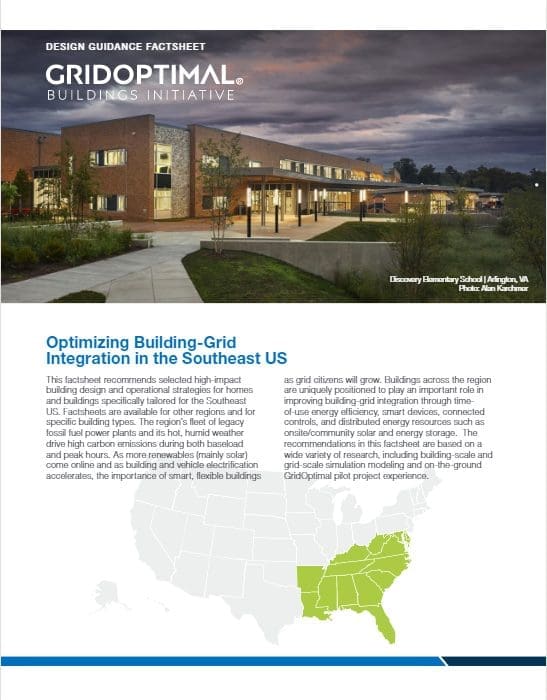
GridOptimal Building Design and Operations Fact Sheets
Thirteen easy-to-understand brief fact sheets provide key context and recommend selected high-impact building design and operations strategies for various building types and U.S. regions.
ASHRAE’s Grid-Interactive Buildings for Decarbonization: Design and Operation Resource Guide
NBI was the lead author on the most detailed and comprehensive design and operations guidance manual available for architects, engineers, building owners, and operators seeking to deliver GridOptimal buildings. This guide provides overviews and foundational guidance, while also delving into the specifics, offering detailed design, specification, and operational recommendations for various building systems.
The guide caters to the full range of building types and complexities, providing guidance for simple, standalone systems found in small businesses and homes. Additionally, it covers larger-scale, complex systems with interconnected systems and distributed energy resources.
GridOptimal Buildings LEED Credit
Project teams can receive up to three points for improving building-grid optimization in the LEED-BD&C v4 and v4.1 rating systems. GridOptimal metrics are used to define project performance and award points. LEED project teams can use the free GridOptimal Pilot ACP calculator to demonstrate performance, but other project teams will likely also find the tool’s analysis and chart capabilities useful. In LEED v5, multiple credit options encourage projects to achieve similar outcomes.
GridOptimal Metrics Calculator
This spreadsheet enables designers, building owners, consultants, and others to quantify a building’s operational performance as a grid asset by calculating the building’s GridOptimal metric scores, including estimates of demand flexibility. Users can input information, including their building’s location and load shape, and will see GridOptimal metric scores. Automated graphs showing building peak demand shapes, grid load shapes, and grid carbon emissions are also available.
GridOptimal Measure Impact Analysis Tool
NBI drew on a large body of GridOptimal research and pilot projects to develop an interactive tool that enables users to compare the impacts of various energy efficiency and demand flexibility strategies across a wide range of U.S. climate and grid zones, as well as different building types.
GridOptimal Utility Program Guidance
NBI and project partners developed two new resources to help building designers, builders, and other project team members evaluate building-grid integration strategies in their projects and to help utility companies better understand the benefits available from behind-the-meter interventions in buildings.
Questions? Want to talk or collaborate? Contact Alexi Miller, Director of Building Innovation, alexi@newbuildings.org
